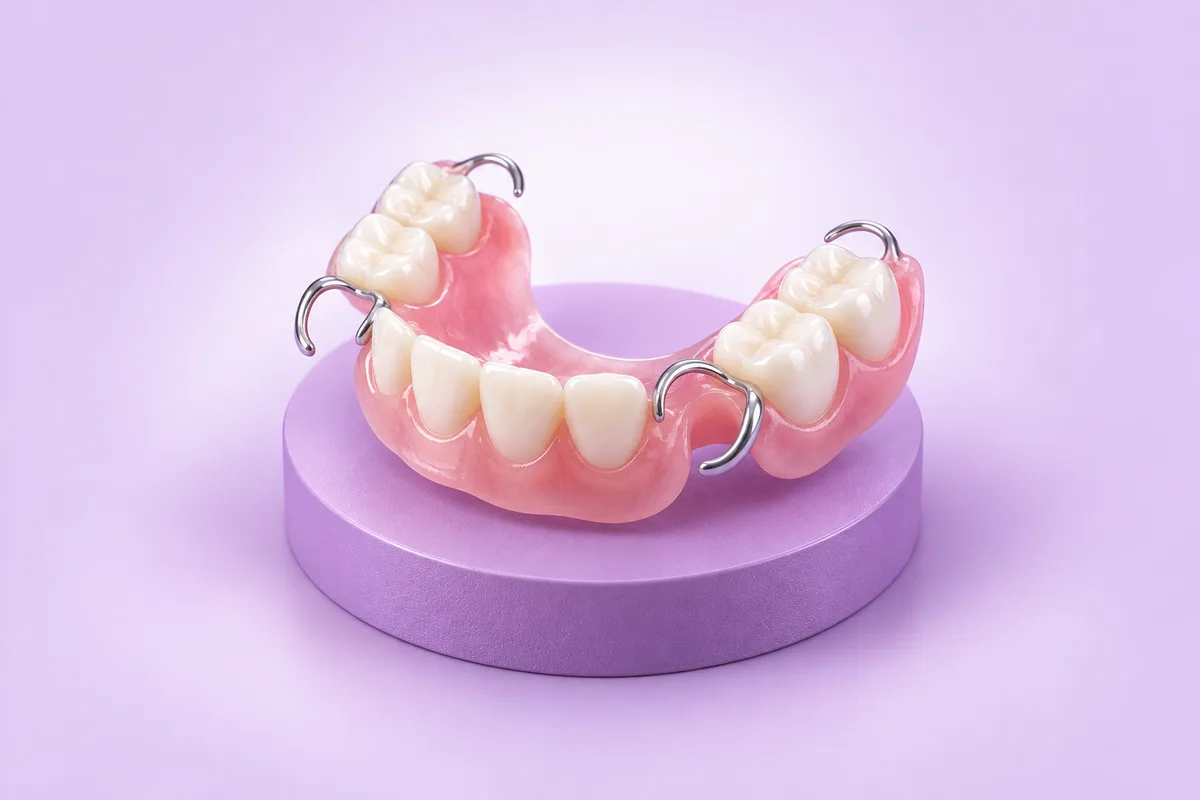
Partial denture — acrylic
Most affordableReplaces several missing teeth at an affordable price.
from 2,800 THB
Modern full and partial dentures look more natural and feel more comfortable than ever before.
We will help you choose the most comfortable option for your mouth.
Replaces several missing teeth at an affordable price.
from 2,800 THB
A thin, strong metal frame for a better fit and comfort.
from 20,000 THB
Replaces all teeth in the upper or lower jaw. Can be stabilised with implants.
from 20,000 THB
We check your gums and remaining teeth and discuss options, including implants.
Impressions and bite records are taken for the lab.
We try in the teeth, adjust and fit your new denture.
| Treatment | Price (THB) |
|---|---|
| Partial denture (acrylic) | from 2,800 |
| Partial denture (metal) | from 20,000 |
| Complete denture (per piece) | from 20,000 |
| Complete denture (full mouth) | from 20,000 |
| Post & core | 4,000 |
| Adding a tooth | 1,500 |
Prices may change. Ask about current promotions.
With recent innovations in modern technology dentures now look more natural and feel more comfortable than ever before. However, it’s important to remember that anything new or foreign to the mouth or to any parts of the body will need time to adjust to it. With a little practice like practice talking or reading aloud, the mouth will eventually get used to the new denture. Chewing will definitely seem strange at first too, so it is best to try starting off with soft foods cut into smaller pieces.
One significant disadvantages of dentures lies in the resorption of underlying bone. Depending on the condition and anatomy of your mouth, other alternatives may be available besides dentures. Implants in conjunction with fixed bridges are often very successful in replacing missing teeth. Under normal chewing conditions, the roots of teeth apply stress to the underlying bone which maintains it and prevents it from atrophy. While implants deliver similar stresses and maintain bone, dentures do not.
A few weeks. Practise talking or reading aloud and start with soft food cut into small pieces.
Use a soft brush with mild soap — toothpaste is too abrasive. Keep it in water or denture solution when not worn and never use hot water.
Implants preserve the jaw bone and feel more natural; dentures cost less. Implant-retained dentures combine both.
Send your details and we'll contact you to confirm a time. Prefer chat? Message us on LINE or WhatsApp.